Original food photography · Proposed business formats
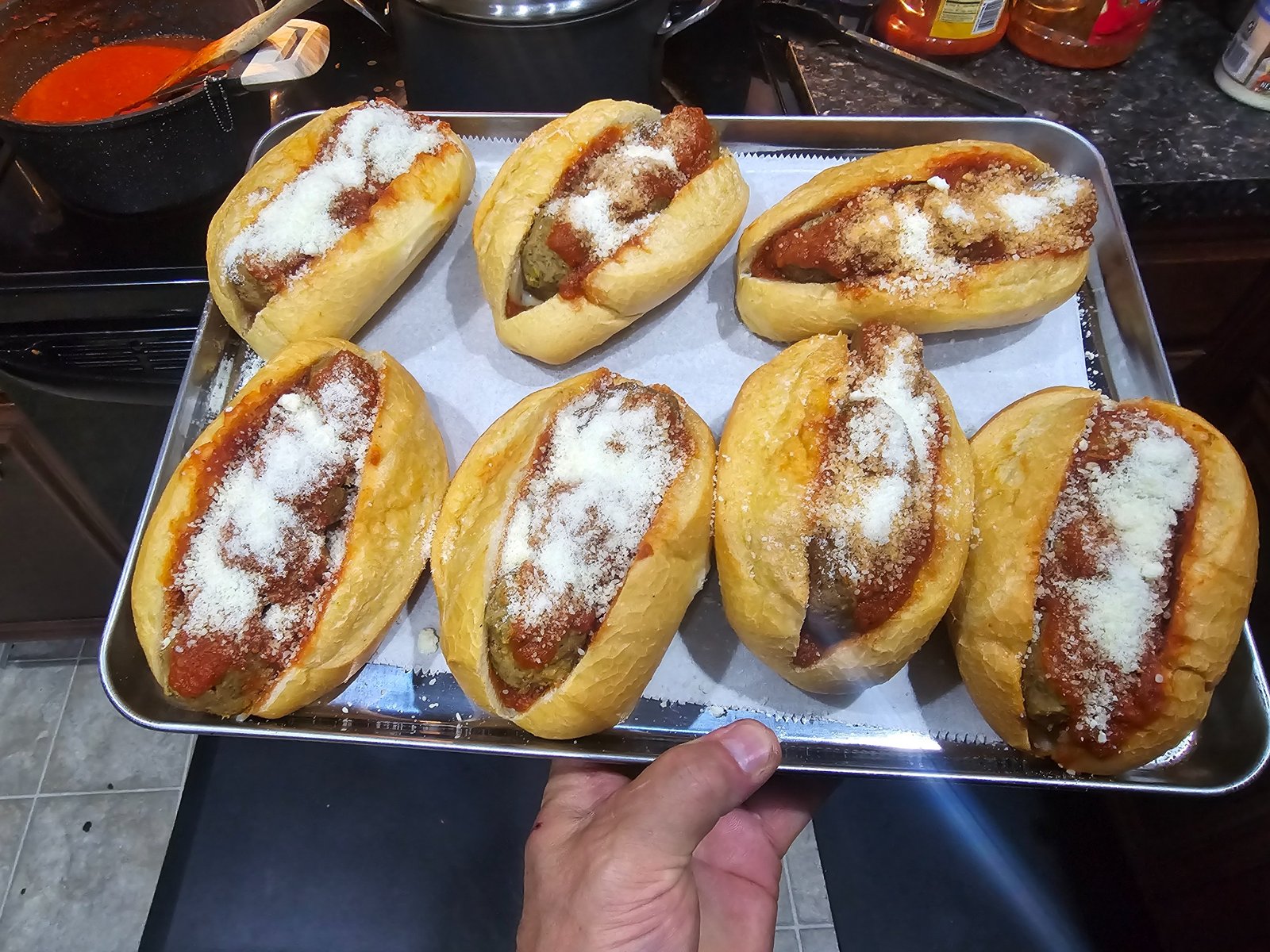
THE REAL THING Ted’s meatball subs, photographed in his kitchen.
Signature meatballsHearty subsPizza in the visionA welcoming place to eat
01 / THE FOOD COMES FIRST
The recipe is where this story starts.
Ted’s own photographs tell it best: ingredients, mixing, shaping, and the finished sandwich. These are photographs of his actual food and preparation.
Texture, ingredients, and a recipe made his own.
THE HEART OF THE MENU
Make the meatball the reason to come back.
The proposed menu starts with the food Ted already makes: signature meatballs and generous meatball subs.
Pizza belongs in the next chapter. The dough, styles, toppings, and final menu will be developed and tested before launch.
Menu development is underway. Final dishes, portions, prices, and availability are still to be established.
01 Start with the ingredients.02 Bring the recipe together.03 Shape the batch.04 Build the sandwich.
Photographs by Ted Johnson. Open any photograph to see its full frame.
EVEN THE BASICS DESERVE THOUGHT
Don’t just salt ’n’ pepper.
Ted hand-selects and blends his salts and peppers. The care that goes into a memorable meal starts with the everyday ingredients, right down to the final grind.
Hand-selected. Hand-blended. Full of thought. For Ted, seasoning is a choice worth making carefully. His salt and pepper blends bring that same personal attention to the stove, the table, and the food he shares.
A LITTLE GIFT WITH SOMETHING TO SAY
As much thought as flavor.
A useful grinder filled with a carefully chosen blend can make a small gift feel personal—something to enjoy long after the wrapping is gone.
Ted’s pepper blend.Ted’s salt blend.Ready for the stove or table.A closer look at the blends.
Ted’s original photographs. Open a photograph to see the full frame.
02 / PICTURE THE POSSIBILITIES
One food identity. Two ways to bring it to life.
A food truck. A small pie shop. Two possible formats for the same idea: memorable food, a focused menu, and hospitality that feels personal.
THE MOBILE FORMAT
The Food Truck
A recognizable truck that could bring meatballs, subs, and a tested pizza menu to suitable local stops, gatherings, and events.
Compact equipment and service workflow.
A focused menu designed for a small team.
Locations and operating costs to be evaluated.
THE NEIGHBORHOOD FORMAT
The Little Pie Shop
A modest, inviting storefront: a few tables, a clear pickup counter, and the aroma of pizza and meatballs welcoming people in.
A practical footprint with comfortable seating.
Simple ordering, pickup, and kitchen flow.
A site and buildout budget to be evaluated.
These AI-generated visualizations show possibilities for discussion. A truck, storefront, and opening date have not been selected.
03 / GOOD FOOD NEEDS GOOD SYSTEMS
The standards behind the idea.
Ted admires the practical lessons of Robert Irvine’s Restaurant: Impossible and Gordon Ramsay’s Kitchen Nightmares. Here is how he wants to apply that inspiration to his own business.
01
Keep the menu focused.
Start with a few signature items. Add a dish when the recipe, equipment, and service can support it.
02
Know the cost of every portion.
Document recipes, yields, ingredient costs, packaging, and waste. Set prices using the full operating picture.
03
Make quality repeatable.
Use clear recipes, measured portions, preparation routines, and checks that a trained team can follow.
04
Keep a clean, organized kitchen.
Build cleaning, safe storage, and opening and closing routines into the operating plan.
05
Train people. Welcome guests.
Give everyone a clear role, communicate during service, and treat feedback as a chance to improve.
Personal inspiration; no affiliation with or endorsement by the chefs or television programs.
04 / A PRACTICAL PATH FORWARD
Build the plan. Then choose the launch.
The food photographs and recipe story are real. The next work is turning the concept into a costed, workable launch plan.
01
Refine the opening menu
Test the recipes, portions, and preparation time.
02
Compare the two formats
Price equipment, staffing, locations, and operating needs.
03
Develop the business case
Build startup budgets, sales assumptions, and cash-flow scenarios.
04
Choose a supported launch
Match the format to the budget, team, and suitable approvals.
LET’S HAVE A CONVERSATION
Help shape what comes next.
Interested in discussing funding, an operating partnership, or a potential location? Ted would welcome a practical conversation about the concept and the work needed to bring it to life.